Sahay Racks Blog
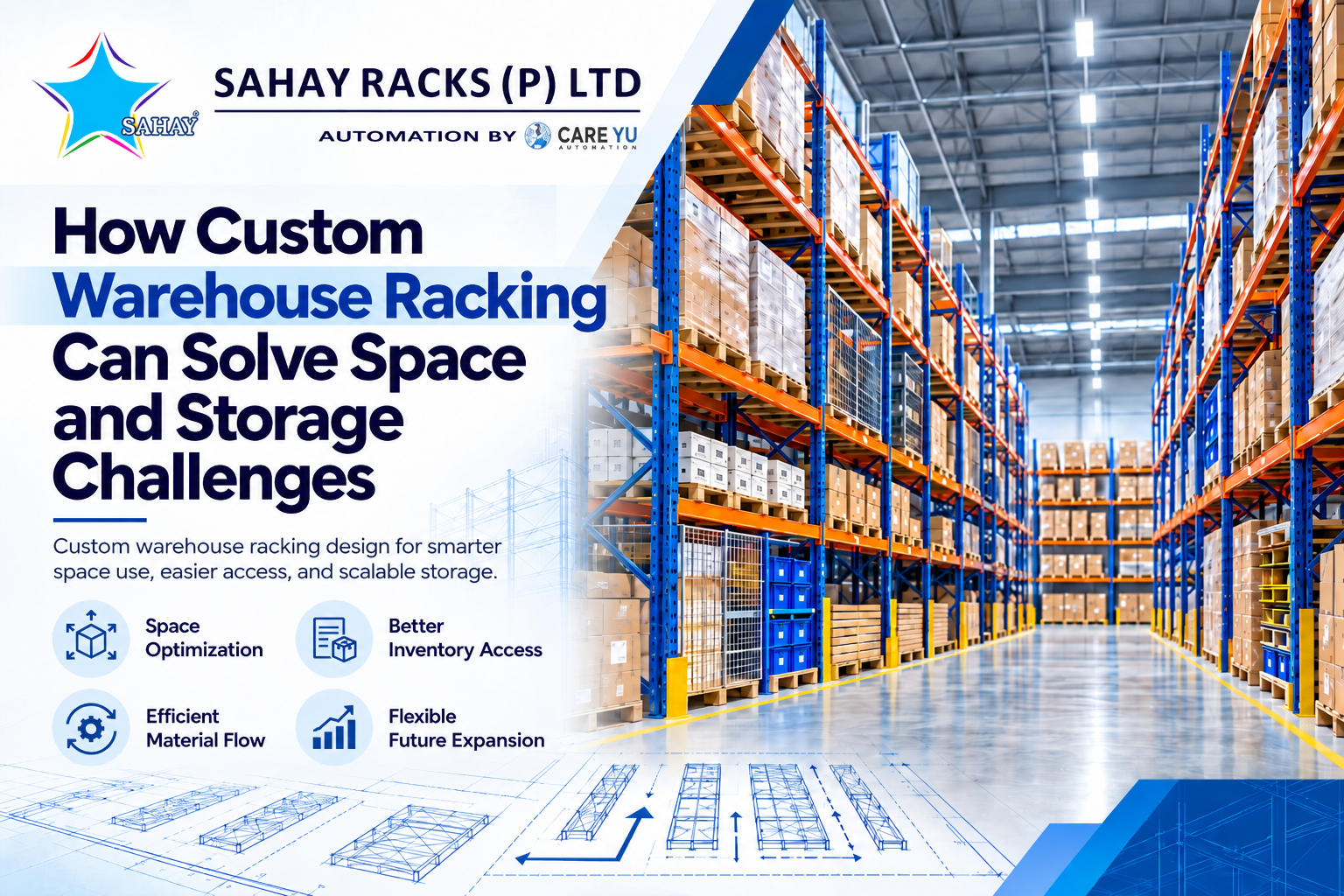
How Custom Warehouse Racking Can Solve Space and Storage Challenges
Efficient warehouse storage is crucial for businesses that manage large inventories, various product sizes, and frequent material handling. As the need for storage grows, standard racks may not always meet the space utilisation and flexibility required by a warehouse.
A custom warehouse racking design allows businesses to create a storage system that fits their specific needs, including available space, product dimensions, load capacity, handling equipment, and daily operations. Instead of altering warehouse processes to fit standard racks, customised racking is designed to meet the actual requirements of the facility.
Common Warehouse Space and Storage Challenges
Many warehouses face storage difficulties when inventory levels rise or operations expand. Limited floor space, poorly arranged racks, unused vertical areas, and crowded aisles can complicate warehouse management.
Some typical challenges include:
- Limited storage space
- Different pallet and product sizes
- Unused vertical space
- Difficulty in accessing inventory
- Crowded aisles
- Increasing stock levels
- Inefficient movement of goods
A well-designed racking system can help businesses make better use of their existing warehouse space.
Maximise Available Storage Space
One key advantage of custom warehouse racking is the better use of available space. Every warehouse has different dimensions, ceiling heights, columns, doors, and loading areas. Therefore, custom racks should be designed to suit these conditions.
For instance, taller racking systems can make use of vertical space, and well-planned aisle widths can increase storage capacity without affecting the movement of materials. This helps businesses store more products in the same space.
Storage Solutions Based on Product Requirements
Warehouses often store pallets, cartons, spare parts, long materials, heavy components, or products of varying sizes and weights.Products can vary greatly in size and weight. As a result, using the same rack configuration for every product can waste space and make access difficult.
Custom racks can be designed based on:
- Product size and weight
- Pallet dimensions
- Required load capacity
- Inventory volume
- Product movement frequency
- Material handling equipment
This results in more organised storage and ensures that each rack is suitable for the materials being stored.
Better Use of Vertical Warehouse Space
Vertical space is often underutilised in warehouses. When storage is mainly at floor level, a significant amount of space remains unused. Customised pallet racks, multi-level systems, or mezzanine storage solutions can help make better use of warehouse height.
Making better use of vertical space can increase storage capacity without requiring additional floor area. The height of the rack should always be planned according to building clearance, equipment capabilities, operational needs, and applicable safety standards.
Improve Inventory Accessibility
Warehouse storage should not only increase capacity but also make it easier to locate and access products. A well-planned custom warehouse racking design can arrange products based on their movement frequency. Fast-moving inventory can be placed in easily accessible areas, while slower-moving items can be stored in higher or less frequently accessed locations.
Better product placement can reduce unnecessary movement and support faster picking and dispatch operations.
Support Smooth Material Movement
Rack layout affects how goods move inside a warehouse. Forklifts, pallet trucks, workers, and trolleys need enough space to move freely between storage areas. Custom racking allows aisle widths, turning spaces, loading zones, and rack positions to be planned according to the equipment used.
This helps create a smoother flow of materials from receiving to storage, picking, and dispatch.
Flexible Storage for Future Growth
Warehouse needs can change as a business grows. New products may be introduced, stock levels may increase, or pallet sizes may change. A customised racking system can be designed with adjustable beam levels, modular sections, and expansion options.
This gives businesses greater flexibility to modify their storage system instead of replacing it entirely when requirements change.
How to Choose the Right Warehouse Racking Design
Before selecting a racking system, businesses should evaluate factors such as:
- Warehouse dimensions
- Available vertical space
- Type of products
- Load capacity
- Pallet dimensions
- Inventory turnover
- Forklift requirements
- Future expansion plans
A warehouse assessment helps businesses choose the right rack layout. As a result, storage becomes easier to manage.
Frequently Asked Questions
1. What is custom warehouse racking design?
Custom warehouse racking design is a storage solution that is created based on the specific measurements, product types, weight limits, and operational needs of a warehouse.
2. How does custom racking improve space utilisation?
Custom racking can make better use of the available floor and vertical space by choosing the right rack height, layout, aisle width, and storage arrangement.
3. Can custom racks store different types of products?
Yes, custom warehouse racks can be designed to store various types of products, including pallets, cartons, heavy materials, long items, spare parts, and products of different sizes and weights.
4. Is custom racking suitable for growing businesses?
Yes, custom warehouse racking is suitable for growing businesses. It can be expanded or adjusted as inventory levels, product ranges, or storage needs change over time.
5. What factors should be considered before designing warehouse racks?
Before designing warehouse racks, several factors should be considered. These include the available space, product dimensions, weight capacity, type of handling equipment, required aisle space, how inventory is moved, and future storage requirements.
6. Does limited warehouse space always mean I need a bigger building?
Warehouse space limitations do not always mean that additional buildings or larger facilities are needed. Proper planning can often increase the storage capacity of an existing warehouse.
7. What are the overall benefits of custom warehouse racking?
A well-designed custom warehouse racking system helps businesses use floor and vertical space more effectively, organize inventory in a better way, improve access to stored items, and support smooth movement of materials. By selecting a storage system that meets the actual needs of the warehouse, businesses can create a more organized, adaptable, and efficient storage environment that supports long-term growth.
Call to Action
👉 Need a warehouse storage solution?
Contact Sahay Racks today for a free consultation and layout design.
 Call us today +91 9942991075
 Visit: www.sahayracks.org
 Request a free consultation and stay connected with us for updates and insights on Facebook and LinkedIn.