
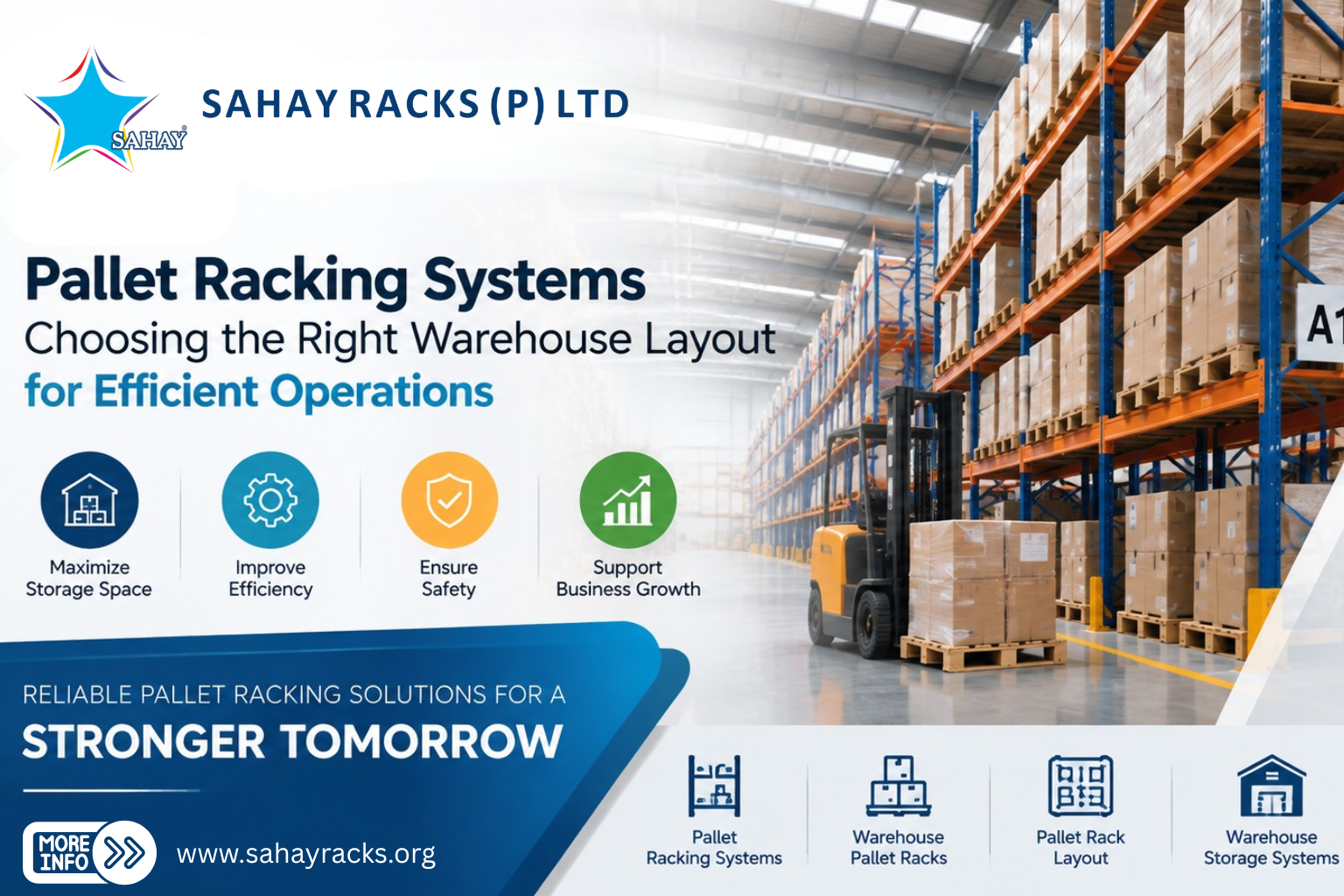
Pallet Racking Systems: How to Select the Right Layout for Faster Warehouse Operations
Warehouse efficiency is the cornerstone of a profitable supply chain. In an era where customers expect lightning-fast deliveries, every second saved in storage and retrieval directly impacts your order fulfilment rates, labour productivity, and overall operational costs. The foundation of this efficiency lies in your pallet racking system—the structural framework that determines how your inventory moves, how your staff works, and how your space is utilised. Choosing the right layout goes beyond mere storage capacity; it is about designing a workflow that accelerates your entire warehouse operation.
Assessing Your Operational Requirements
Selecting the optimal racking system demands a methodical evaluation of your warehouse ecosystem. This is not a one-size-fits-all decision but rather a strategic choice influenced by multiple interdependent factors.
Product Characteristics
Begin by examining the physical attributes of your inventory. The weight of your unit loads determines whether you require light-duty, medium-duty, or heavy-duty racking structures. The dimensions of your goods—length, width, and height—dictate the appropriate bay sizes, beam spacing, and clearances needed for safe storage. Equally important is understanding your inventory turnover patterns. Fast-moving products with high daily throughput demand systems that offer instant accessibility, whereas slow-moving bulk inventory can be relegated to higher-density storage configurations that prioritise space over speed.
Warehouse Infrastructure
Your facility’s physical characteristics impose practical limitations on what is achievable. Ceiling height determines the maximum number of vertical storage levels you can install—every additional level adds capacity without consuming expensive floor space. Aisle width profoundly influences both storage density and equipment selection; narrower aisles maximise space but require specialised material handling equipment with precise navigation capabilities. Floor load capacity cannot be overlooked—your concrete slab must safely support the combined weight of uprights, beams, and fully loaded pallets without risk of structural failure.
Operational Dynamics
Your warehouse workflow dictates which racking architecture will perform optimally. If your operation follows First-In, First-Out (FIFO) principles—critical for perishable goods or products with expiration dates—you will require systems that facilitate sequential retrieval. Conversely, Last-In, First-Out (LIFO) operations align with configurations that prioritise front-access loading and unloading. The type of material handling equipment in use—manual pallet jacks, counterbalance forklifts, reach trucks, or automated guided vehicles—determines beam heights, clearances, and aisle dimensions. Your throughput targets influence whether you need minimal retrieval times or prioritise maximum inventory density.
Exploring Racking Configurations
Selective Pallet Racking remains the most widely adopted system across Indian warehouses. Its defining advantage is 100% selectivity—every pallet stored is directly accessible without moving other loads. This flexibility makes it particularly suitable for operations managing diverse SKU portfolios with varying turnover frequencies.
Drive-In and Drive-Through Systems achieve remarkable storage density by minimising aisle space. Pallets are stored in multiple depths, with drive-in configurations featuring a single entry-exit point and drive-through designs allowing loading from one side and unloading from the other. These work exceptionally well for bulk commodities with limited variety and LIFO inventory movement.
Pallet Flow Racking leverages gravity to create an efficient FIFO system. Pallets glide along inclined rollers or wheels from the loading end to the picking face, making it ideal for high-turnover products where stock rotation is essential.
Push-Back Racking offers dense storage with LIFO retrieval. Each lane accommodates multiple pallets on nested carts; as new pallets are loaded, they push existing ones backwards. This system suits operations that handle multiple SKUs per lane at medium rotation rates.
Cantilever Racking addresses the unique challenges of lengthy or irregularly shaped loads. Its open-front design, featuring arms extending from vertical columns, provides unobstructed access for loading and unloading pipes, tubing, lumber, and other oversized materials.
Crafting an Efficient Layout Strategy
The physical arrangement of your racking system significantly influences operational velocity. Zoning involves strategically positioning inventory based on demand patterns, placing fast-moving items near despatch areas to minimise travel time, and placing slower-moving stock in peripheral locations.
Aisle Dimensions require careful trade-off analysis. Wider aisles accommodate larger, faster equipment but consume valuable floor area. Narrow-aisle configurations reclaim space but necessitate specialised equipment and more cautious navigation.
Vertical Utilisation remains an underleveraged opportunity. Extending racking to your full available height can substantially increase capacity without expanding your physical footprint. Implementing varied beam heights that correspond to pallet heights typically yields 25–35 per cent space savings.
Slotting Optimisation positions high-velocity items in the “golden zone”—the ergonomic height range between knee and shoulder level—enhancing picking speed and reducing worker fatigue. Heavier pallets should reside at lower levels to minimise lifting risks and equipment strain.
Partnering with the Right Manufacturer
Selecting a reliable racking partner is as critical as choosing the right system. Your manufacturer should demonstrate deep engineering expertise, provide custom solutions tailored to your specific warehouse constraints, and offer ongoing support for installation and maintenance. Quality materials, robust design, and adherence to safety standards are non-negotiable requirements.
Why Sahay Racks Stands Apart
At Sahay Racks, we recognise that every warehouse presents unique challenges and opportunities. As distinguished pallet rack manufacturers in India, we combine rigorous engineering with practical operational insights to deliver racking solutions that transform warehouse performance.
Our approach begins with a comprehensive site assessment, evaluating your product characteristics, facility constraints, and workflow patterns. We then design and install customised racking configurations—from versatile selective systems to space-maximising drive-in structures—using premium materials and manufacturing processes that ensure longevity and safety.
What truly sets Sahay Racks apart is our commitment to partnership. We do not simply supply equipment; we collaborate with you to create storage ecosystems that evolve with your business. Our team provides end-to-end support, from initial consultation through installation, operator training, and after-sales service.
Transform Your Warehouse with the Right Pallet Racking System
Are you ready to accelerate your warehouse operations and unlock hidden capacity? Connect with Sahay Racks today. Let our experienced professionals design a pallet racking system that optimises your space, streamlines your workflows, and drives sustainable growth for your business. Your journey toward superior warehouse efficiency starts with a single conversation—make it count.
Call to Action
👉 Need a warehouse storage solution?
Contact Sahay Racks today for a free consultation and layout design.
 Call us today +91 9942991075
 Visit: www.sahayracks.org
 Request a free consultation and stay connected with us for updates and insights on Facebook and LinkedIn.