
Warehouse Storage Racks: How to Plan the Right Storage System for Growing Inventory
Business growth is a positive sign, but increasing inventory can quickly create storage challenges. More cartons, raw materials, finished goods and spare parts require more than just additional floor space. They need an organised storage system that lets employees store, identify, and retrieve products efficiently.
Warehouse storage racks help businesses make better use of available space while keeping inventory arranged systematically. However, selecting a rack system should not be based only on how much material needs to be stored today. Businesses should also consider future stock levels, warehouse movement, product characteristics and operational requirements.
Working with an experienced warehouse storage racks supplier can help businesses plan a storage arrangement that supports current operations while preparing for future inventory growth.
Start with an Assessment of Current Inventory
Before deciding on a rack configuration, businesses should understand what they are actually storing. Different products can have completely different storage requirements.
The assessment should consider product dimensions, weight, packaging type, stock quantity, movement frequency and the equipment used for material handling. A warehouse storing large industrial components, for example, may require a different rack arrangement from a facility handling smaller cartons or packaged products.
Inventory can also be classified according to movement. Frequently accessed products may be placed in convenient locations, while slow-moving stock can be allocated to other suitable sections.
This assessment provides useful information for determining rack dimensions, capacity and overall warehouse layout.
Make Better Use of Vertical Warehouse Space
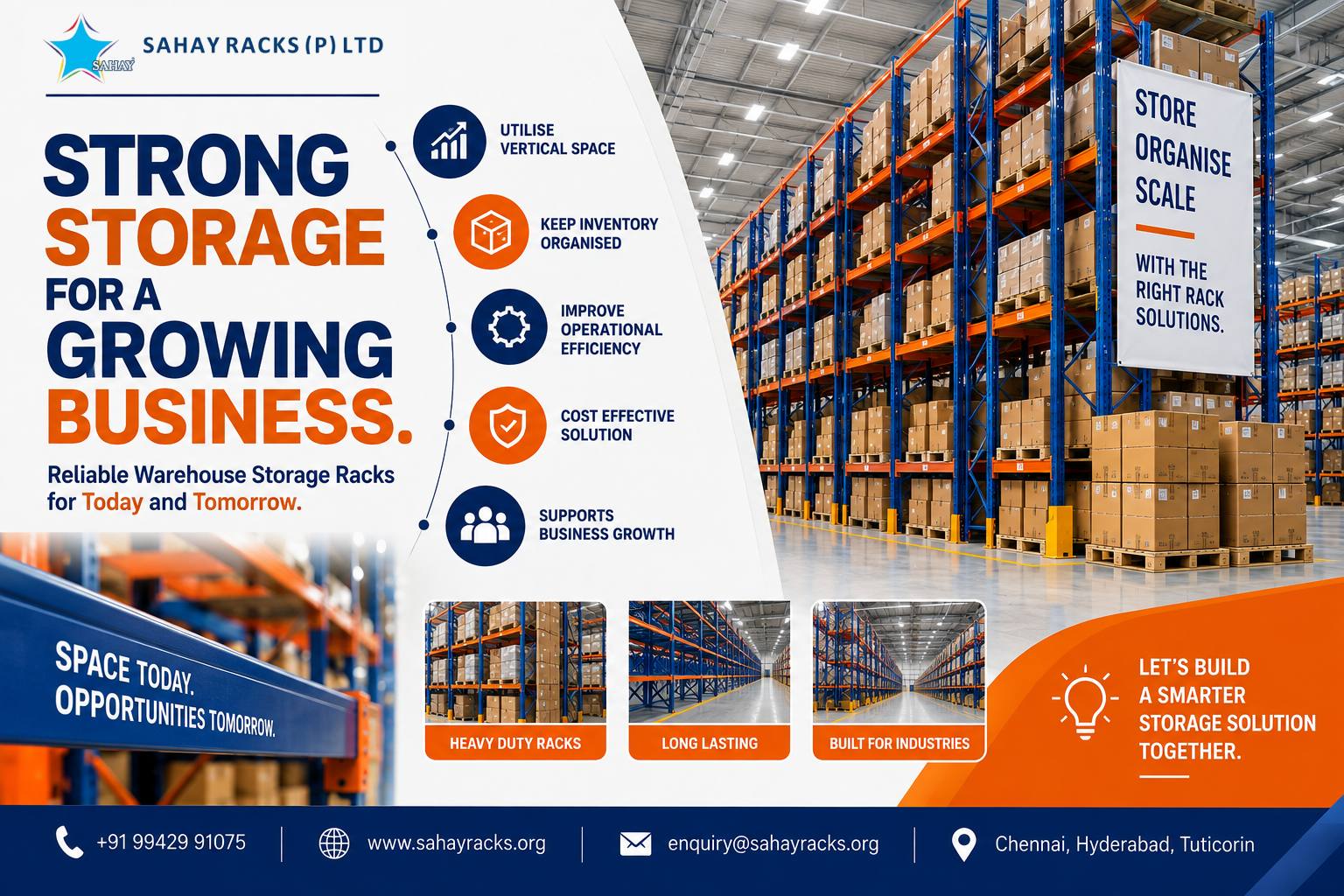
When inventory increases, businesses often consider expanding their floor area. However, many warehouses may have unused vertical space that can be utilised with properly planned storage racks.
A suitable rack system lets you store goods at multiple levels instead of spreading inventory across the floor. This can help accommodate additional stock within the available warehouse area.
Vertical storage should still be planned according to practical requirements. Ceiling height, rack dimensions, product weight, accessibility and material-handling equipment can all influence how effectively the available height is used.
An experienced warehouse storage racks supplier can consider these factors when identifying a suitable rack configuration.
Plan Aisles Around Everyday Operations
Storage capacity is only one part of warehouse planning. Employees and material-handling equipment must also have sufficient room to move between storage sections.
If aisles are too narrow, routine stock movement can become difficult. If they are unnecessarily wide, valuable warehouse space may remain underutilised. The appropriate aisle width depends on how products are handled and the equipment used within the facility.
Forklifts, pallet trucks, trolleys and employee movement should therefore be considered when determining rack positions. Loading, picking and dispatch areas should also connect logically with the storage layout.
The aim is to balance available storage capacity with practical movement throughout the warehouse.
Select Racks According to Load Requirements
Warehouse racks are designed for different storage requirements. Selecting the appropriate option begins with understanding the weight and dimensions of the materials that will be placed on each rack level.
Light cartons, medium-weight products and heavy industrial materials may require different rack specifications. Choosing racks only according to available space without considering the intended load can result in an unsuitable storage arrangement.
Businesses should identify expected loads as accurately as possible and communicate these requirements when discussing rack options. Product width, height and depth should also be considered.
Matching rack specifications with actual inventory requirements creates a more practical foundation for warehouse storage planning.
Consider Accessibility and Stock Rotation
A warehouse may have enough storage capacity but still experience operational delays when products are difficult to locate or retrieve.
Rack planning should therefore reflect the way inventory moves through the facility. Frequently picked products can be positioned in areas that support easier access, while items required less often can be assigned to other suitable sections.
Stock rotation methods should also be considered. Depending on the nature of the inventory, businesses may follow First In, First Out (FIFO) or another appropriate inventory management approach.
Organising products according to their movement patterns can reduce unnecessary searching and make everyday stock handling more structured.
Allow Space for Future Inventory Growth
Planning a warehouse entirely around present stock levels can create limitations later. As a business grows, it may introduce new product categories, carry larger quantities or experience seasonal inventory changes.
Future storage requirements should therefore be considered during the initial planning stage. Businesses can evaluate expected stock growth, potential new products and changes in material-handling activities.
A flexible storage arrangement can make it easier to accommodate changing inventory requirements. This approach may also reduce the need to repeatedly reorganise large sections of the warehouse whenever stock levels increase.
Structure Storage Sections for Better Workflow
Different areas of a warehouse can be organised according to how products are received, stored, picked and dispatched. Creating clearly defined storage sections can make inventory locations easier to understand and support a more consistent workflow.
Fast-moving products may be assigned to locations closer to regular picking routes, while less frequently handled materials can occupy other suitable sections. Product categories can also be grouped logically where this supports easier identification and handling.
Businesses should avoid allowing cartons, pallets or unused materials to occupy regular movement areas. Keeping products within designated rack locations helps maintain a structured storage environment.
As inventory requirements change, rack sections can be reviewed to determine whether the existing arrangement still supports everyday operations effectively.
Create a Storage Layout That Can Grow with Your Operations
Warehouse requirements rarely remain unchanged. Business expansion can bring larger stock quantities, additional products and new handling requirements. For this reason, rack planning should consider both present operations and possible future developments.
Instead of focusing only on fitting the maximum amount of stock into available space, businesses should consider accessibility, product movement, rack capacity and flexibility. A carefully planned system can support inventory management without making the warehouse unnecessarily difficult to navigate.
Sahay Racks provides warehouse racking solutions for different storage requirements. Working with a reliable warehouse storage racks supplier can help businesses evaluate available space, inventory characteristics and operational needs before deciding on anappropriate storage arrangement.
A well-planned warehouse rack system creates a structured foundation for managing growing inventory while making more effective use of the available storage space.
Call to Action
👉 Need a warehouse storage solution?
Contact Sahay Racks today for a free consultation and layout design.
 Call us today +91 9942991075
 Visit: www.sahayracks.org
 Request a free consultation and stay connected with us for updates and insights on Facebook and LinkedIn.