Efficient warehouse management starts with proper storage and organization. Warehouses handle different types of products, components, tools and inventory every day. Without a suitable storage system, finding items, managing stock and maintaining an organized workspace can become challenging. This is where warehouse storage bins play an important role.
Warehouse storage bins help businesses organize inventory, improve accessibility and make better use of available storage space. However, choosing the right bins requires more than simply selecting a suitable design. Factors such as size, material, load capacity and intended usage should be considered before making a purchase.
In this guide, we explain how to select the right warehouse storage bins for your operational requirements.
1Understand Your Storage Requirements
Before purchasing storage bins, identify the products and materials you need to store. Different warehouse operations require different storage solutions.
For example:
Understanding the type, quantity and dimensions of your inventory helps you select bins that support daily warehouse activities.
2Choose the Right Bin Size
Size is one of the most important factors when selecting warehouse storage bins. Bins that are too small may not accommodate the required inventory, while oversized bins can waste valuable storage space.
Consider the following points when selecting bin dimensions:
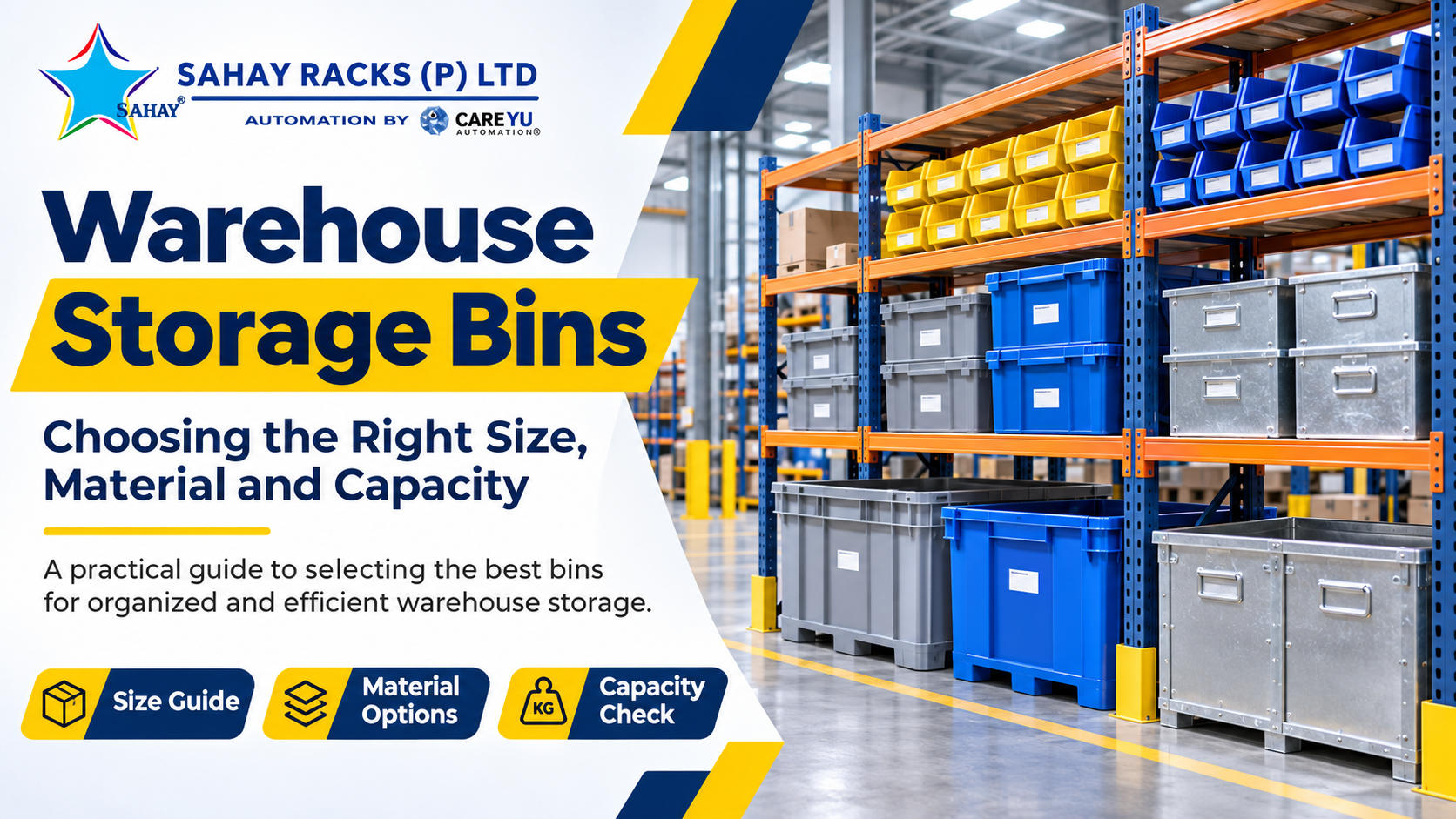
Small Storage Bins
Suitable for screws, nuts, bolts, electrical components and other small items. They help maintain organized storage for frequently used materials.
Medium Storage Bins
Ideal for hand tools, machine accessories, packaged products and medium-sized inventory.
Large Storage Bins
Designed for bulky components, industrial materials and products that require additional storage space.
It is also important to consider shelf dimensions, rack compatibility and available warehouse space. Selecting bins with suitable dimensions helps maximize storage efficiency.
3Select the Right Material
The material of a storage bin determines its durability, weight capacity and suitability for different working environments.
Here are some commonly used materials:
Plastic Storage Bins
Plastic bins are widely used because they are lightweight, easy to handle and resistant to moisture. They are suitable for storing small components, packaged goods and general warehouse inventory. Their easy-to-clean surfaces also make them practical for regular warehouse operations.
Metal Storage Bins
Metal bins are suitable for demanding industrial environments where strength and durability are important. They can be used for storing heavy components, tools and industrial materials, depending on their construction and load rating.
Stackable Plastic Bins
Stackable bins help businesses utilize vertical storage space efficiently. They are particularly useful in warehouses with limited floor areas and high inventory volumes.
Choosing the right material depends on the nature of your products, storage conditions and frequency of handling.
4Check the Load-Bearing Capacity
Every storage bin has a specific load capacity. Exceeding this limit can cause deformation, damage or storage-related safety problems.
Before selecting warehouse storage bins, check:
- Maximum load capacity of each bin.
- Whether the bin is suitable for static or dynamic loading.
- Stacking capacity when multiple bins are placed together.
- Compatibility with warehouse shelving and storage racks.
- Weight distribution of the stored materials.
For heavy industrial components, choose bins specifically designed to support the required weight. Always follow the manufacturer's load specifications rather than estimating the capacity based on appearance.
5Consider Stackability and Accessibility
An organized warehouse should allow employees to identify, access and retrieve products without unnecessary movement.
Stackable warehouse storage bins help reduce clutter and make better use of available vertical space. However, ensure that the bins have a stable design and can be safely stacked according to the manufacturer's recommendations.
Features such as front-access openings, label holders and clearly visible identification areas can further improve inventory management.
These features are particularly useful in warehouses that handle multiple product categories and frequently process orders.
6Evaluate Warehouse Environment and Usage
Storage requirements can vary depending on the warehouse environment. Factors such as temperature, humidity, dust exposure and handling frequency should influence your selection.
For example, moisture-resistant plastic bins may be suitable for certain humid environments, while heavy-duty metal bins may be more appropriate for storing industrial components.
If bins are frequently moved between workstations, consider lightweight designs with convenient handling features. For stationary storage, prioritize durability and compatibility with the existing shelving system.
7Compare Quality, Durability and Cost
Price should not be the only deciding factor when purchasing storage bins. Low-quality bins may require frequent replacement, increasing long-term operating expenses.
Compare different options based on material quality, construction, load capacity, design and expected service life.
Investing in durable storage solutions can help businesses maintain consistent warehouse organization while reducing unnecessary replacement costs.
Why Choose Sahay Racks for Warehouse Storage Solutions?
Choosing suitable storage equipment is essential for creating an organized and productive warehouse. Sahay Racks offers industrial storage solutions designed to support different warehousing and material-handling requirements.
When planning your warehouse storage system, consider solutions that match your available space, inventory type and operational needs. Selecting the right storage bins alongside compatible industrial racks can help improve accessibility, organization and overall space utilization.
Conclusion
Selecting the right warehouse storage bins involves evaluating several important factors, including size, material, load capacity, stackability and working environment. The right combination helps businesses organize inventory, utilize warehouse space effectively and simplify everyday material-handling activities.
Whether you manage a manufacturing facility, distribution centre or e-commerce warehouse, investing in suitable storage bins can make a noticeable difference to your operations.
Looking for reliable warehouse storage solutions? Explore Sahay Racks to identify storage options that match your warehouse requirements.
Explore Sahay RacksFrequently Asked Questions
1. What are warehouse storage bins used for?
Warehouse storage bins are used to organize, store and manage inventory, tools, spare parts, components and other materials.
2. Which material is best for warehouse storage bins?
Plastic bins are suitable for lightweight and general storage, while metal bins are useful for applications requiring greater strength and durability.
3. How do I choose the correct storage bin size?
Consider the dimensions, quantity and weight of the items being stored, along with available shelf and rack space.
4. Are stackable storage bins suitable for industrial warehouses?
Yes. Stackable bins can help utilize vertical space and improve organization when their stacking limits and stability requirements are followed.
5. Why is load capacity important when choosing storage bins?
Load capacity indicates the maximum weight a bin can safely support. Selecting the correct capacity helps prevent damage and maintain safer storage conditions.
Call to Action
👉 Need a warehouse storage solution?
Contact Sahay Racks today for a free consultation and layout design.
 Call us today +91 9942991075
 Visit: www.sahayracks.org
 Request a free consultation and stay connected with us for updates and insights on Facebook and LinkedIn.