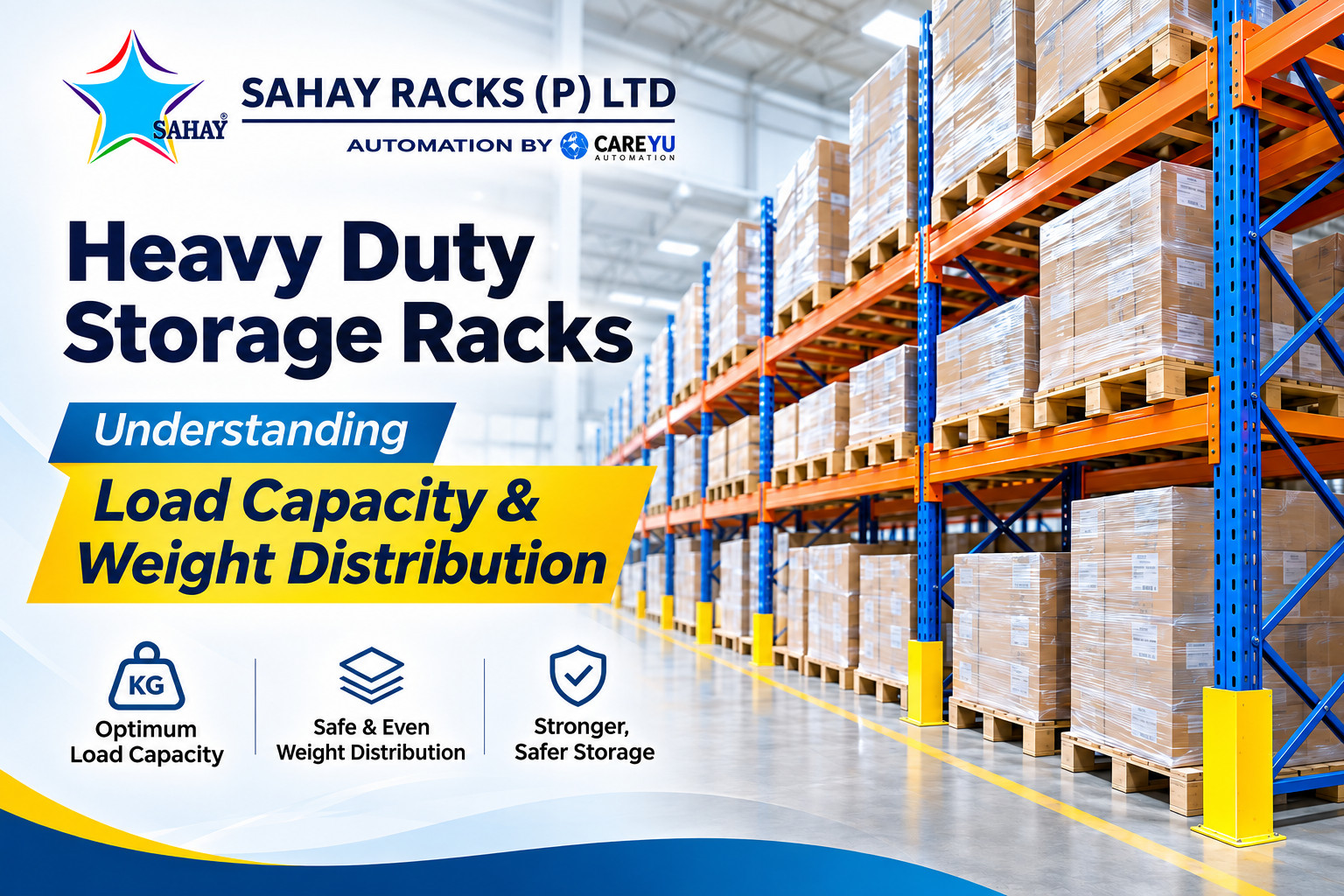
Heavy-Duty Storage Racks: Understanding Load Capacity and Weight Distribution
Warehouses, factories, and industrial storage facilities need good space management. However, efficient storage is not just about fitting more products into the space. It also means storing every item safely.
Heavy-duty storage racks carry large loads and stay stable. So, when you understand load capacity and weight distribution, you store goods more safely. You also reduce rack damage and use your warehouse space better.
What Is Load Capacity in Heavy-Duty Storage Racks?
Load capacity is the maximum weight a rack can safely hold. Every racking system has a weight limit. This limit depends on the materials, structure, size, and installation.
Rack load capacity has three key parts:
- Shelf or Beam Level Capacity: The most weight that one shelf or beam level can hold.
- Bay Capacity: The total load that all levels in one rack bay can hold.
- Upright Frame Capacity: The load that the vertical frame can carry safely.
These limits work together. For example, each shelf may stay within its rating. Even so, the whole rack must stay within its overall limit.
Why Weight Distribution Matters in Storage Racks
Weight distribution is how you place goods across the rack. Poor distribution puts too much pressure on some beams, shelves, or uprights.
For example, imagine you place a heavy machine part at one end of a shelf. That spot takes more stress than it would if you spread the same weight as the loading design shows.
Good weight distribution has several benefits:
- It reduces pressure on single rack parts.
- It keeps the rack stable while you load and unload.
- It lowers the chance of bending or damage.
- It makes material handling safer.
- It helps the storage system last longer.
Therefore, always follow the manufacturer's loading instructions. This matters most when you store oddly shaped or concentrated loads.
Factors That Influence Rack Load Capacity
Not all Heavy Duty Storage Racks carry the same load. Several design and operating factors decide their capacity.
1. Material Strength and Construction
The steel grade and thickness affect how much weight a rack can hold. Likewise, the build of the rack plays a big role. Well-engineered parts make industrial storage dependable.
2. Rack Dimensions and Configuration
Rack height, beam length, shelf depth, and level spacing all affect strength. If you change these sizes, the load capacity may change too.
3. Type of Stored Materials
Pallets, machine parts, cartons, and equipment all load a rack differently. In addition, concentrated loads may need extra support or special shelves.
4. Floor Conditions and Installation
The floor must handle the load that passes through the uprights. Also, correct installation matters. Anchor the rack where needed, and keep it properly aligned for safety.
Best Practices for Safe Weight Distribution
You can keep your warehouse safer by following a few simple tips.
- Check Rated Capacities: Before loading, confirm the capacity of each level and of the whole rack.
- Distribute Loads Correctly: Follow the rack's loading pattern. Never put all the weight in unsupported areas.
- Store Heavy Items Strategically: If the design allows, place heavier items on lower levels. This makes handling easier and keeps the rack more stable.
- Avoid Overloading: Never go over the manufacturer's load limits, even for a short time.
- Inspect Racks Regularly: Look for bent uprights, damaged beams, loose connections, and impact marks from forklifts.
- Review Storage Changes: Check the load limits again whenever you move beams, change levels, or store new products.
Choosing the Right Heavy Duty Storage Racks for Your Business
Choosing a rack takes more than comparing sizes and prices. Instead, look at product weight, storage volume, handling equipment, floor space, and future growth.
At Sahay Racks, we know that every business has different storage needs. Therefore, a well-planned heavy-duty racking solution helps you organize materials well. It also supports safer daily operations.
Conclusion
Load capacity and weight distribution are the basis of good warehouse storage. When you choose the right rack and load it correctly, you protect your materials. You also keep the structure stable and work more efficiently.
So, invest in suitable Heavy Duty Storage Racks, and follow the recommended loading practices. As a result, your storage area becomes more organized, reliable, and productive.
Frequently Asked Questions (FAQs)
1. What is the load capacity of Heavy Duty Storage Racks?
It depends on the rack size, steel grade, beam design, and structure. Therefore, always check the manufacturer's capacity details.
2. Why is weight distribution important in warehouse racks?
Correct distribution prevents too much stress on single parts. As a result, the whole rack stays stable.
3. Can heavy items go on upper rack levels?
Yes, but only if the rack suits those loads. You also need the right handling equipment. Always follow the load limits and the loading setup.
4. How often should you inspect heavy-duty storage racks?
Do routine visual checks often. In addition, schedule periodic documented inspections. The right timing depends on usage, operating conditions, and safety rules.
5. Can Heavy-Duty Storage Racks be customized?
Yes. Engineers can plan racks for different loads, product sizes, layouts, and handling methods. However, each design needs proper engineering.
Call to Action
👉 Need a warehouse storage solution?
Contact Sahay Racks today for a free consultation and layout design.
 Call us today +91 9942991075
 Visit: www.sahayracks.org
 Request a free consultation and stay connected with us for updates and insights on Facebook and LinkedIn.