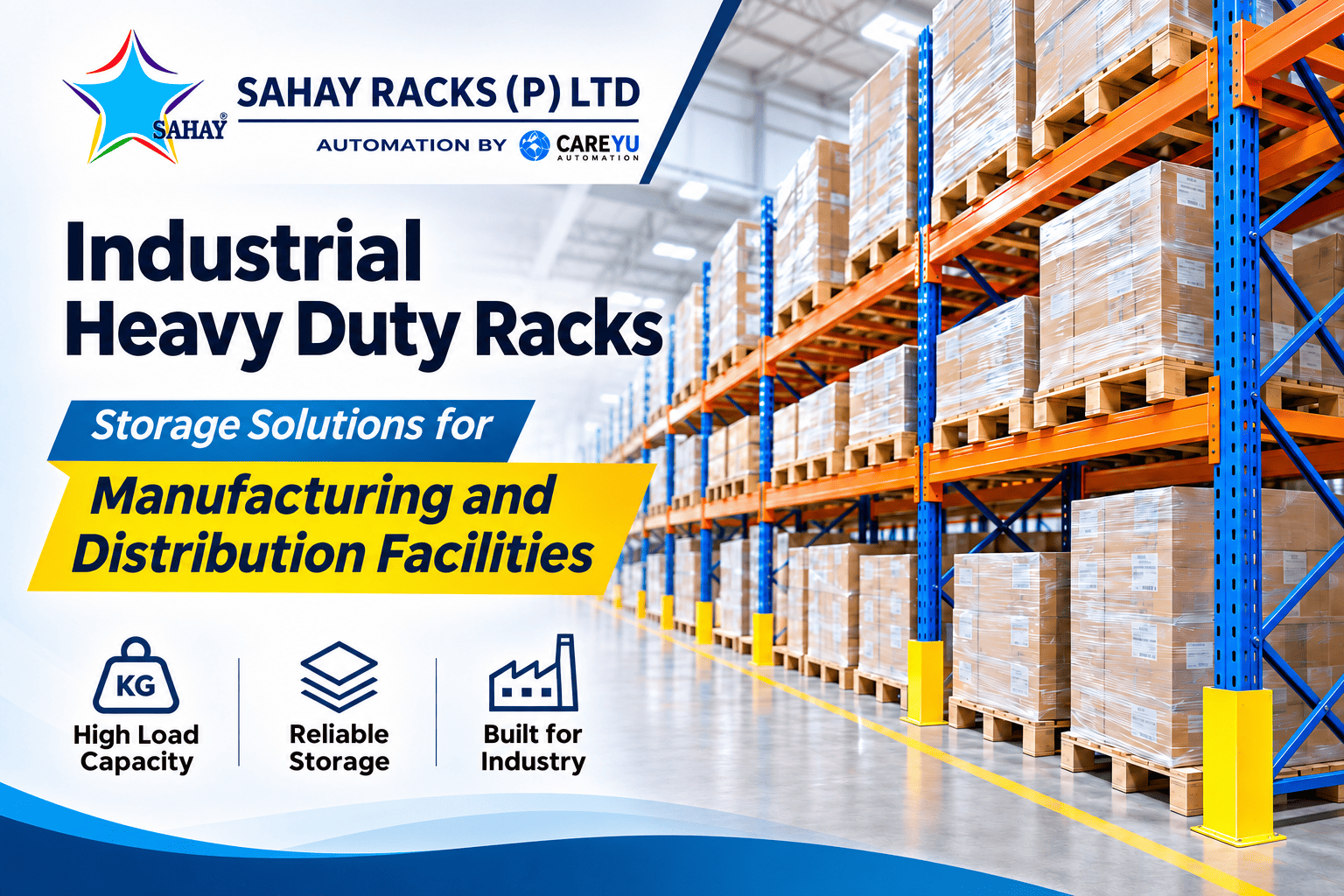
Industrial Heavy Duty Racks: Storage Solutions for Manufacturing and Distribution Facilities
Organised storage for heavy materials, large inventories and busy daily operations.
Modern manufacturing units and distribution facilities require organised storage systems to manage large inventories, heavy materials, and daily operational activities. As businesses expand, traditional storage methods may no longer provide sufficient space, accessibility, or safety. This is where Industrial Heavy Duty Racks become an essential investment.
These storage systems help companies maximise available floor space, improve inventory management, and maintain an organised working environment. Whether managing raw materials, finished products, machinery components, or bulk supplies, choosing the right racking solution can significantly improve warehouse efficiency.
What Are Industrial Heavy Duty Racks?
Industrial heavy duty racks are specially engineered storage structures designed to support substantial loads while maintaining stability and durability. Manufactured using high-strength steel, these systems are suitable for warehouses, factories, logistics centres, and large-scale distribution facilities.
Unlike conventional shelving units, industrial-grade storage structures accommodate bulky goods, heavy pallets, and oversized inventory. Their modular configurations also allow businesses to customise storage arrangements according to available space and operational requirements.
Key Benefits of Industrial Heavy Duty Racks
Investing in an appropriate storage infrastructure offers several advantages for industrial environments.
1. Maximum Space Utilisation
Warehouse space is valuable, particularly when businesses manage increasing inventory volumes. Vertical storage configurations help utilise available ceiling height, reducing unnecessary floor-level congestion. This arrangement creates additional room for material handling equipment and movement.
2. Improved Inventory Organisation
Clearly arranged storage locations make identifying, accessing, and tracking products easier. Employees can locate required materials without spending excessive time searching through unorganised stockpiles. This contributes to smoother warehouse operations.
3. Enhanced Load-Bearing Capacity
Heavy-duty structures are designed to accommodate substantial weights when properly engineered and installed. Reinforced frames, durable beams, and suitable support components provide dependable storage for industrial materials.
4. Better Workplace Safety
Organised inventory placement reduces clutter and minimises the risk of accidental collisions or falling materials. Appropriate load distribution, secure installation, and regular inspections further support a safer working environment.
5. Long-Term Cost Efficiency
Durable steel construction offers extended service life with appropriate maintenance. Businesses can also reduce space-related expenses by improving storage density instead of immediately expanding their premises.
Popular Types of Industrial Storage Racks
Different industries require specific configurations depending on product dimensions, inventory turnover, and handling equipment.
Selective Pallet Racks: These systems provide direct access to individual pallet positions, making them suitable for facilities handling multiple product categories.
Drive-In Racks: Designed for high-density inventory storage, these structures allow forklifts to enter designated storage lanes. They are particularly useful for businesses storing large quantities of similar products.
Heavy Duty Cantilever Racks: Featuring projecting arms instead of conventional front supports, these configurations accommodate lengthy materials such as steel pipes, timber, metal sheets, and construction components.
Multi-Tier Racking Systems: These arrangements create multiple storage levels, helping facilities utilise vertical clearance while organising smaller items across different sections.
Longspan Shelving: Suitable for medium-to-heavy materials, longspan systems provide flexible storage for cartons, equipment, spare parts, and industrial supplies.
Applications Across Manufacturing and Distribution Facilities
Industrial storage infrastructure supports various business operations.
- Manufacturing Plants: Store raw materials, machine components, tools, and finished goods systematically.
- Distribution Centres: Organise incoming shipments, outgoing orders, and bulk inventory.
- Automotive Industries: Maintain organised arrangements for spare parts, accessories, and mechanical components.
- Construction Suppliers: Accommodate heavy building materials, metal sections, and equipment.
- Logistics Warehouses: Improve stock accessibility while supporting efficient loading and unloading activities.
Selecting suitable configurations helps businesses establish consistent material-handling processes across different departments.
How to Choose the Right Industrial Heavy Duty Racks
Before purchasing a storage system, evaluate several important factors.
- Load Requirements: Determine the weight and dimensions of individual products, pallets, and stored materials.
- Available Space: Measure floor area, ceiling height, aisle widths, and forklift movement requirements.
- Inventory Turnover: Consider how frequently products enter, leave, or move between storage locations.
- Material Quality: Choose robust construction with appropriate protective finishes for the operating environment.
- Future Expansion: Select modular arrangements that accommodate changing inventory volumes and business growth.
- Safety Standards: Ensure professional installation, clearly displayed load limits, suitable anchoring, and routine inspections.
Working with an experienced storage solutions provider can help businesses identify configurations that match their operational needs.
Frequently Asked Questions (FAQs)
Conclusion
Efficient storage infrastructure plays an important role in maintaining productive manufacturing and distribution operations. Industrial Heavy Duty Racks provide a practical way to organise inventory, utilise available space, improve accessibility, and support workplace safety.
By evaluating load capacity, warehouse dimensions, product categories, and future requirements, businesses can select storage configurations that deliver long-term operational value. Investing in well-designed racking systems helps establish a more organised, scalable, and efficient industrial environment.
Call to Action
👉 Need a warehouse storage solution?
Contact Sahay Racks today for a free consultation and layout design.
 Call us today +91 9942991075
 Visit: www.sahayracks.org
 Request a free consultation and stay connected with us for updates and insights on Facebook and LinkedIn.