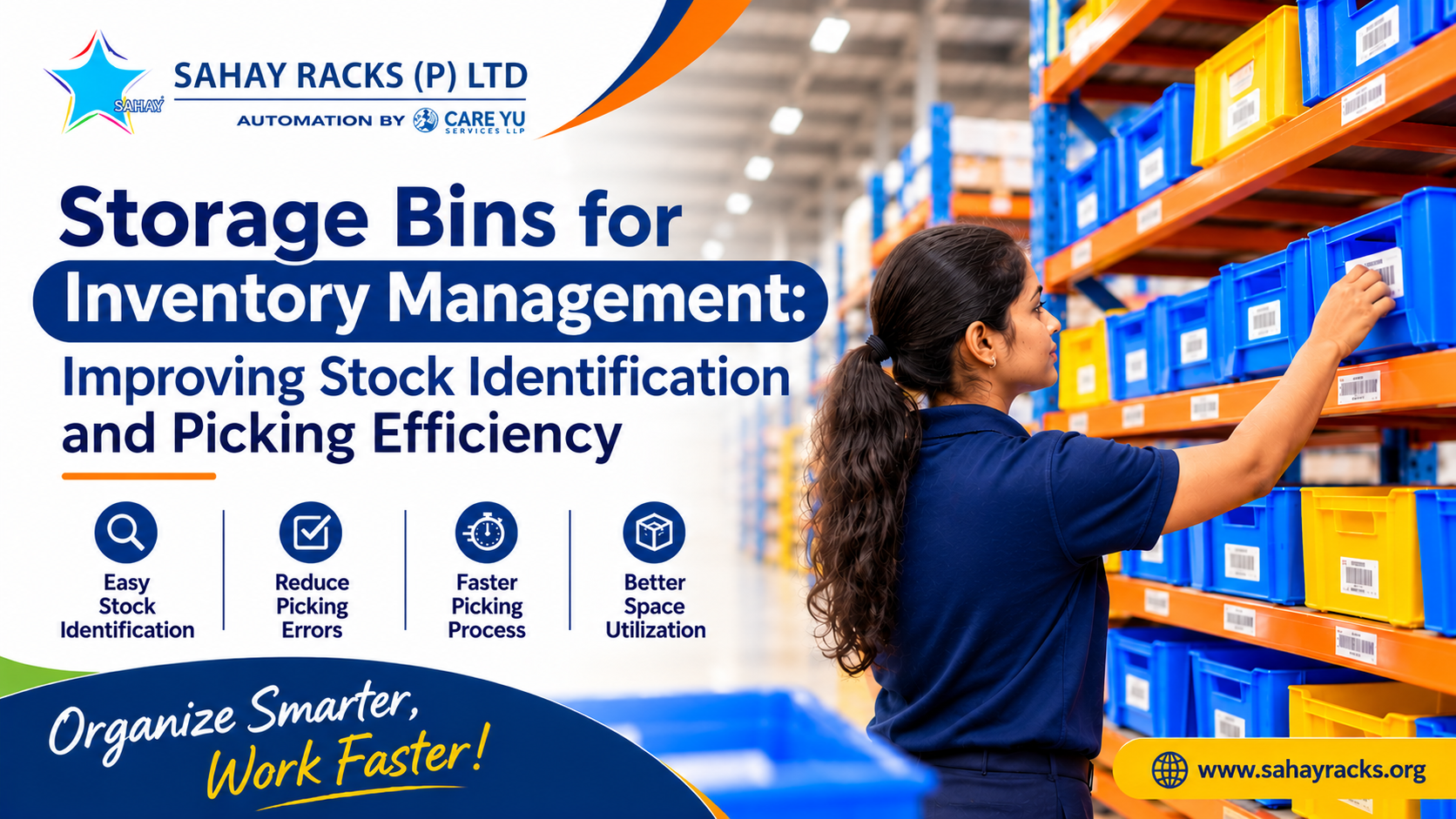
Storage Bins for Inventory Management: Improving Stock Identification and Picking Efficiency
Managing inventory efficiently is essential for warehouses, manufacturing units, retail businesses, and distribution centres. As businesses handle increasing numbers of products, maintaining accurate stock records and locating items quickly can become challenging. Poor storage arrangements often lead to misplaced products, picking errors, unnecessary delays, and reduced productivity.
Storage Bins for Inventory Management provide a practical solution to these challenges. They help businesses organize products systematically, improve stock identification, and make inventory retrieval easier. When combined with suitable warehouse storage racks and proper labelling systems, storage bins can significantly improve everyday warehouse operations.
What Are Storage Bins for Inventory Management?
Storage bins are containers designed to organize and store different types of inventory in a structured manner. They are commonly used for storing small components, spare parts, tools, packaged products, and other materials that require systematic organization.
Unlike traditional storage methods, storage bins provide designated locations for individual products or categories. This makes it easier for warehouse employees to identify available stock, monitor inventory levels, and retrieve required items.
Businesses can use plastic bins, stackable bins, compartment bins, and industrial storage containers depending on their storage requirements.
How Storage Bins Improve Inventory Management
Implementing a proper bin storage system offers several advantages for businesses handling multiple inventory categories.
1. Improve Stock Identification
Finding the correct product becomes difficult when different items are stored together without proper identification. Storage bins help businesses assign separate locations to different products.
Adding labels containing product names, item codes, barcodes, or QR codes makes identification easier. Employees can quickly recognize the required inventory without opening multiple containers or searching through different storage areas.
This approach also helps minimize confusion between similar-looking products.
2. Reduce Picking Errors
Picking the wrong product can affect order accuracy, customer satisfaction, and overall warehouse productivity.
Storage bins help prevent these mistakes by maintaining separate locations for different inventory items. Employees can follow a systematic picking process using product labels and bin identification codes.
For warehouses handling large numbers of orders, this organized arrangement can reduce unnecessary picking errors and improve order fulfilment accuracy.
3. Improve Picking Speed and Efficiency
Employees often spend valuable working hours searching for products in poorly organized warehouses. A structured bin storage arrangement helps reduce this time.
Frequently picked products can be placed in easily accessible locations, while slow-moving inventory can be stored in less frequently accessed sections.
This arrangement reduces unnecessary movement, improves picking speed, and supports smoother warehouse operations.
4. Maintain Better Inventory Accuracy
Accurate inventory records are important for purchasing, stock replenishment, and order processing.
Assigning unique identification codes to storage bins helps businesses maintain better control over stock locations. When combined with barcode scanning or inventory management software, employees can record stock movements more accurately.
This makes it easier to identify available quantities, track inventory movements, and detect stock discrepancies.
5. Maximize Available Storage Space
Poorly arranged inventory can occupy valuable warehouse floor space. Stackable storage bins and suitable rack-based storage systems help businesses utilize available space more effectively.
Placing storage bins on industrial shelving or bin storage racks creates dedicated storage locations and improves accessibility.
Businesses can also organize inventory vertically instead of keeping multiple containers scattered across the warehouse floor.
Best Practices for Organizing Storage Bins
To achieve better results, businesses should follow a consistent storage organization process.
- Categorize inventory by type, size, application, and usage frequency.
- Use clear labels: Include product names, identification numbers, and barcode details wherever necessary.
- Assign bin locations: Give every storage location a unique identification code.
- Prioritize fast-moving products: Keep frequently picked inventory in easily accessible positions.
- Conduct regular stock checks: Verify inventory quantities and update records to maintain accuracy.
- Choose suitable storage racks: Use compatible shelving systems to arrange bins safely and make the most of available space.
Following these practices helps maintain an organized warehouse environment and improves daily inventory handling.
Why Combine Storage Bins with Warehouse Storage Racks?
Storage bins provide organized product containers, while warehouse storage racks offer structured spaces to arrange them. Combining these solutions creates a more efficient storage arrangement.
Suitable industrial racks help businesses organize multiple bins, improve vertical space utilization, and provide convenient access to stored materials.
The right rack configuration should consider bin dimensions, inventory weight, accessibility, and the warehouse layout. Proper planning ensures that employees can retrieve products without unnecessary handling or movement.
Conclusion
Efficient inventory management requires more than simply storing products in available spaces. Businesses need an organized system that supports accurate stock identification, faster picking, and better inventory control.
Storage Bins for Inventory Management, when combined with proper labelling practices and suitable warehouse storage racks, can help businesses create a more systematic and productive storage environment.
Looking for reliable warehouse storage solutions? Sahay Racks offers industrial storage racks, customized racking solutions, and storage planning support to help businesses improve warehouse organization and space utilization. With solutions designed for different industrial and commercial requirements, Sahay Racks helps businesses build efficient and well-organized storage environments.
Visit Sahay Racks to explore suitable storage solutions for your business requirements.
Frequently Asked Questions (FAQs)
1. What are storage bins used for in inventory management?
Storage bins are used to organize products, components, tools, and spare parts into designated locations. They improve stock identification, accessibility, and inventory organization.
2. How do storage bins reduce warehouse picking errors?
Storage bins provide separate locations for different products. Clear labelling and identification codes help employees select the correct items during order picking.
3. Which storage bins are suitable for industrial warehouses?
Plastic bins, stackable bins, and heavy-duty industrial containers are commonly used depending on product dimensions, weight, storage conditions, and handling requirements.
4. Can storage bins improve warehouse space utilization?
Yes. Stackable storage bins and suitable rack-based arrangements help businesses utilize vertical space, reduce clutter, and organize inventory more effectively.
5. How can businesses improve stock identification in warehouses?
Businesses can use labelled storage bins, unique bin location codes, barcode systems, and inventory management software to identify products and track stock movements accurately.
Call to Action
👉 Need a warehouse storage solution?
Contact Sahay Racks today for a free consultation and layout design.
 Call us today +91 9942991075
 Visit: www.sahayracks.org
 Request a free consultation and stay connected with us for updates and insights on Facebook and LinkedIn.