Industrial Storage Bins: How to Organize Small Parts in Warehouses and Factories
Warehouses and factories handle thousands of small components every day. From nuts, bolts and screws to electrical fittings, machine parts and assembly accessories, keeping these items organized is essential for smooth operations. When small parts are stored without a proper system, employees spend valuable time searching for materials, inventory becomes difficult to track, and workplace efficiency can suffer.
They provide a practical and systematic way to store, identify and access small components in industrial environments. Whether you operate a manufacturing unit, an assembly line or a large warehouse, choosing the right storage solution can improve space utilization and streamline daily activities.
Why Is Organizing Small Parts Important in Warehouses and Factories?
Small components may occupy less space individually, but managing them in large quantities can become challenging. Improper storage can result in misplaced items, stock discrepancies and unnecessary delays.
An organized storage system helps businesses:
- Reduce the time spent searching for small components.
- Maintain better inventory visibility.
- Prevent mixing up similar-looking parts.
- Improve workplace safety and housekeeping.
- Make picking and material handling more efficient.
- Utilize available warehouse space effectively.
A well-planned storage arrangement also supports consistent workflows, especially in manufacturing facilities where employees require quick access to different components.
1Choose the Right Industrial Storage Bins
The first step towards better organization is selecting suitable storage bins based on the type, size and quantity of materials.
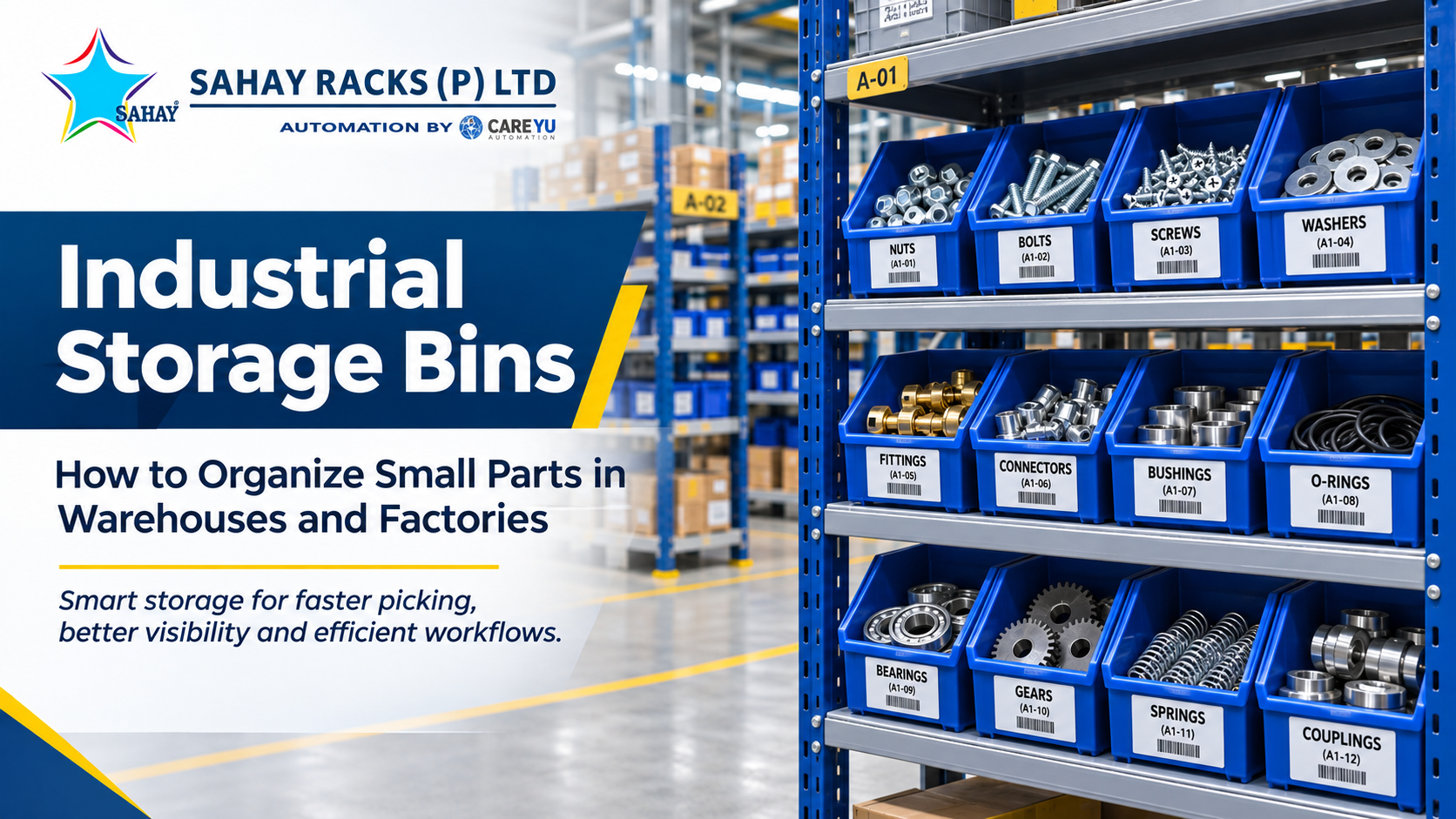
Different industrial applications require different bin designs. For example, small plastic bins are suitable for screws, washers and electrical components, while larger bins can accommodate heavier machine parts and production accessories.
Before selecting industrial storage bins, consider:
- Size and capacity: Choose bins that comfortably accommodate the stored components.
- Material: Select durable materials suitable for the working environment.
- Accessibility: Ensure employees can easily identify and retrieve stored items.
- Stackability: Stackable bins help maximize vertical storage space.
- Load requirements: Check the bin’s load-bearing capacity before storing heavy materials.
Selecting appropriate bins prevents unnecessary clutter and makes inventory management easier.
2Categorize Small Components Before Storage
Mixing different components in the same storage area can create confusion and increase picking errors. Categorizing materials before placing them into bins makes the storage system more effective.
Organize components based on:
- Product type and category.
- Size and dimensions.
- Material specifications.
- Application or production requirements.
- Frequency of usage.
For example, a manufacturing facility can maintain separate storage sections for fasteners, electrical accessories, machine spares and assembly components.
This approach creates a structured storage arrangement and helps employees locate the required materials without wasting time.
3Use Proper Labelling and Identification Systems
Even a well-organized storage area can become difficult to manage without proper identification. Labelling each bin helps employees recognize its contents quickly and reduces the chances of picking incorrect materials.
Consider including the following information on bin labels:
- Component or product name.
- Item identification number.
- Size or specification.
- Stock quantity.
- Barcode or QR code, where applicable.
Colour-coded labels can also be introduced to differentiate product categories. For warehouses handling large inventories, barcode-based identification can further simplify stock tracking and material movement.
4Maximize Storage Space with Industrial Racks
Floor space is valuable in warehouses and manufacturing facilities. Keeping small components in scattered containers or on workstations can occupy unnecessary space.
Combining industrial storage bins with suitable industrial storage racks provides a more organized arrangement.
Rack-based storage systems offer several advantages:
- Make better use of vertical space.
- Keep frequently used components within easy reach.
- Create dedicated storage locations for different categories.
- Improve workplace organization.
- Support systematic material handling.
Depending on operational requirements, businesses can choose suitable shelving systems, bin storage racks or modular storage arrangements.
5Arrange Bins Based on Usage Frequency
Not every component is required with the same frequency. Some materials are used throughout the day, while others are needed only occasionally.
Arranging storage bins based on usage frequency can improve workflow efficiency.
A practical approach includes:
This arrangement reduces unnecessary movement and helps employees complete picking and assembly activities more efficiently.
6Follow a Regular Inventory and Maintenance Process
Organizing small parts is not a one-time activity. Without regular monitoring, storage areas can gradually become cluttered again.
Businesses should establish a simple inventory management routine that includes:
- Checking stock quantities periodically.
- Removing damaged or unused components.
- Updating bin labels when materials change.
- Maintaining designated storage locations.
- Replenishing frequently used components on time.
A consistent maintenance process helps preserve the benefits of an organized storage system.
How Industrial Storage Bins Improve Warehouse Efficiency
Implementing a suitable bin storage system can make a noticeable difference in daily warehouse operations. Employees can identify materials faster, picking activities become more systematic, and businesses gain better control over smaller inventory items.
When combined with industrial shelving and organized rack layouts, storage bins also help businesses make productive use of available floor and vertical space.
For manufacturing units, this organized approach can support smoother production activities by ensuring that essential components remain accessible when required.
Conclusion
Managing small components efficiently is an important part of warehouse and factory operations. The right combination of industrial storage bins, proper labelling, systematic categorization and industrial rack systems can help businesses maintain organized storage areas and improve material accessibility.
Investing in a suitable storage arrangement is not simply about keeping products in order. It is about creating a more efficient working environment where employees can locate, handle and manage materials with greater ease.
Sahay Racks offers industrial storage and racking solutions designed to support organized warehouse and material handling requirements. Choosing the right storage system can helpbusinesses build a more structured, productive and space-efficient workplace.
Frequently AskedQuestions (FAQs)
Call to Action
👉 Need a warehouse storage solution?
Contact Sahay Racks today for a free consultation and layout design.
 Call us today +91 9942991075
 Visit: www.sahayracks.org
 Request a free consultation and stay connected with us for updates and insights on Facebook and LinkedIn.